
Reviving lead quality for a Welding Service through manual Google campaigns and website reconstruction
A local welder in the capital city approached us after experiencing a sudden decline in both lead volume and lead quality
Service
Google Ads

Understanding the vision
The welder provided both mobile on-site welding services and larger workshop projects, supported by a small team capable of handling different types of welding. However, the website barely described the services, mentioning only “welding” without specifying the actual methods or capabilities available. At the same time, the existing Google Performance Max campaign had stopped optimizing effectively, despite months of strong initial conversion data. Lead quality declined because the campaign targeted broad, irrelevant intent, while the absence of service segmentation caused ads to appear for the wrong queries. The business had strong potential, but neither the website nor the campaign structure reflected the full scope of its services.
Crafting the strategy
After thoroughly reviewing the advertising account and website, we identified three core issues. First, Performance Max did not provide the control or transparency needed for a local service business. Second, the website failed to communicate essential capabilities such as TIG/argon welding, MIG/MAG welding, stainless steel welding, aluminum welding, and mobile on-site availability. Third, search intent was not filtered correctly, wasting budget on irrelevant leads. We proposed a complete overhaul: replacing automated Performance Max with fully manual Google campaigns, rebuilding the website to display every welding service clearly, and creating service-specific landing pages for greater relevance and stronger conversion potential.
Driving results
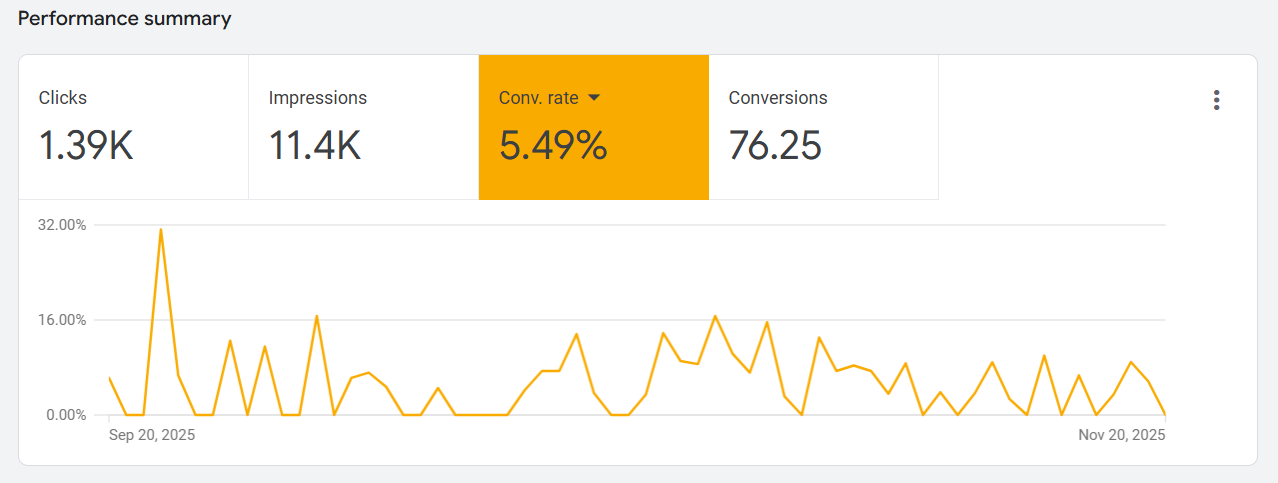
In conclusion
By replacing Google Performance Max with precise manual campaigns and rebuilding the website to present the complete range of services, we improved both lead volume and lead quality without increasing advertising spend. The welder moved from inconsistent, low-quality inquiries to a steady pipeline of high-intent customers who understood the available services and were ready to hire. Clearer service communication and controlled targeting created a sustainable, highly efficient lead-generation system.